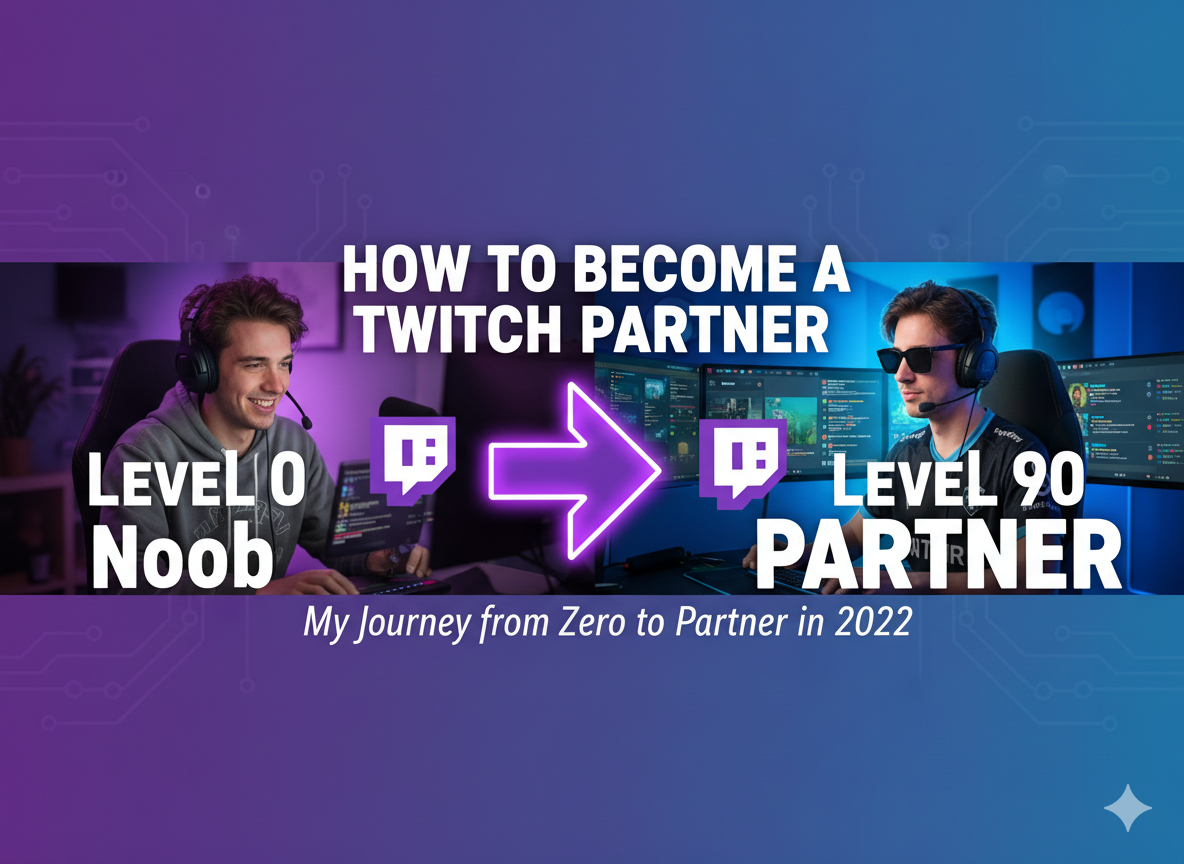
How to Become a Twitch Partner: My Journey from Zero to Partner in 2022

A personal guide to becoming Twitch Partner based on my real experience reaching Partner status in 2022. Learn the requirements, strategies that actually work, common mistakes to avoid, and what to do if your application gets rejected.
How to Become a Twitch Partner: My Journey from Zero to Partner in 2022
Becoming a Twitch Partner is the ultimate goal for many streamers — but the path there is rarely straightforward. In 2022, I achieved Partner status on my channel jonaswagern, and in this guide, I'll share exactly how I did it: the strategies that worked, the mistakes I made, and the milestones that ultimately got me across the finish line.
Published: January 2026 · Personal Experience & Strategy Guide · 12 min read
What Is Twitch Partner Status?
Twitch Partner is the highest tier in Twitch's creator program. Unlike Affiliate status (which most active streamers can achieve within weeks), Partner is an exclusive status that unlocks premium features and better revenue opportunities.
Partner Benefits vs. Affiliate
| Feature | Affiliate | Partner |
|---|---|---|
| Subscription revenue | 50% split | Up to 70% split (negotiable) |
| Emote slots | Up to 5 | Up to 60+ |
| Transcoding (quality options) | When available | Guaranteed priority |
| Verified badge | No | Yes |
| Custom cheermotes | No | Yes |
| Ad revenue control | Limited | Full control |
| Squad Stream | No | Yes |
| Subscriber streams | No | Yes |
For a detailed breakdown of Twitch's official program, check the Twitch Partner Program page.
Official Twitch Partner Requirements
Before diving into strategy, let's clarify what Twitch officially requires. To apply for Partner, you need to meet these minimum thresholds within a 30-day window:
- 25 hours of streaming
- 12 unique broadcast days
- 75 average concurrent viewers
Important: Meeting these requirements doesn't guarantee acceptance. Twitch reviews applications manually and considers factors like community health, content quality, and growth trajectory. I've seen streamers with 100+ average viewers get rejected initially, while others with exactly 75 got accepted.
My Journey to Partner: The jonaswagern Story
I started streaming seriously in 2020. Like most streamers, I began with zero viewers, talking to myself for hours while playing games I loved. Here's how my path to Partner actually unfolded:
Phase 1: The Grind (2020–2021)
My first year was humbling. I streamed 3–4 times per week, averaging 2–5 viewers. I made every beginner mistake:
- Streaming oversaturated games (Fortnite, Warzone) where I was invisible
- Inconsistent schedule that confused potential regulars
- Poor audio quality — my viewers literally couldn't hear me properly
- No presence outside of Twitch (no Twitter, no Discord, no YouTube)
Key milestone: I hit Affiliate after about 3 months, which felt huge at the time. But I quickly realized Affiliate is just the starting line.
Phase 2: Finding My Niche (Early 2021)
The turning point came when I stopped chasing popular games and focused on what made my streams unique. For me, that was:
- Streaming smaller indie games with dedicated but underserved communities
- Creating educational content alongside gameplay
- Building genuine connections through conversation, not just entertainment
Within three months of this shift, my average viewers grew from 8 to 25. Not Partner numbers yet — but real, sustainable growth.
Phase 3: The Push to 75 (Late 2021 – Early 2022)
Getting from 25 to 75 average viewers was the hardest stretch. Here's what actually moved the needle:
- Raids and networking: I actively connected with streamers in my category, raided others consistently, and participated in their chats when I wasn't live.
- Content outside Twitch: I started posting stream highlights on YouTube and TikTok. One clip went semi-viral (50K views) and brought in hundreds of new followers.
- Community Discord: My Discord server became the glue holding my community together between streams.
- Consistent quality upgrades: Better mic, proper lighting, professional overlays. Production value matters more than people admit.
Phase 4: The Application (March 2022)
In February 2022, I finally hit 75+ average viewers consistently. I waited two more weeks to ensure my numbers were stable, then submitted my Partner application.
The wait was excruciating. Twitch says applications are reviewed within 7 business days, but mine took 12 days. I refreshed my email constantly.
Then, on a random Tuesday afternoon, I got the email: "Congratulations! Your Twitch Partner application has been approved."
That moment made two years of grinding worth it.
Strategies That Actually Work
Based on my experience and conversations with dozens of other Partners, here are the strategies with the highest success rate:
1. Master Category Selection
Don't stream Fortnite or GTA V unless you're already famous. Use tools like SullyGnome to find categories with:
- Decent viewer counts (1,000–10,000 total viewers)
- Fewer competing streamers
- Active, engaged communities
For more on this, read our detailed guide on how to get more viewers on Twitch.
2. Build Off-Platform Presence
Twitch's discoverability is terrible for small streamers. You need external traffic sources:
- YouTube: Post highlights, tutorials, or edited content. YouTube's algorithm actually helps small creators.
- TikTok: Short clips can reach millions. Even one viral clip changes everything.
- Twitter/X: Network with other streamers, share going-live posts, engage with gaming communities.
- Discord: Your own server creates a home base for your community.
3. Network Authentically
The streaming community rewards genuine connections. Don't just self-promote — actually participate:
- Watch and chat in similar-sized streamers' channels
- Raid others at the end of your streams (consistently!)
- Collaborate on co-streams or events
- Join streamer Discord servers in your niche
4. Invest in Production Quality
Viewers judge your stream within seconds. Minimum requirements in 2026:
- Clear audio (USB mic minimum, XLR preferred)
- Stable 1080p/60fps stream
- Good lighting (ring light or key light)
- Clean overlays and alerts — get free professional camera borders here
5. Consistency Over Intensity
Streaming 12 hours once a week is less effective than streaming 3 hours four times a week. The algorithm and your community both reward predictability.
Common Mistakes That Delay Partner
I made most of these mistakes myself. Learn from my pain:
Chasing Viewer Count Over Community
Obsessing over numbers instead of building relationships with existing viewers. Loyal regulars bring friends; random viewers don't.
Streaming Only Popular Games
New streamers are invisible in oversaturated categories. Find your niche first, then expand.
Ignoring Audio Quality
Viewers tolerate bad video. They don't tolerate bad audio. Prioritize your microphone.
No Schedule
If people don't know when you're live, they can't show up. Post your schedule everywhere.
Applying Too Early
Submitting applications with barely 75 average viewers often results in rejection. Wait until you're consistently above the threshold.
Expecting Fast Results
Most Partners took 2–4 years to reach that point. This is a marathon, not a sprint.
After Getting Rejected
If your Partner application gets denied, don't panic. Many successful Partners were rejected on their first attempt. Here's what to do:
- Wait the full period: Twitch requires waiting before reapplying. Use this time productively.
- Analyze your metrics: Were you barely hitting 75, or comfortably above? Aim for 85–100 average before reapplying.
- Improve content quality: Review VODs critically. What could be better?
- Grow other metrics: Follower count, chat engagement, and subscriber numbers all matter in the review.
- Build off-platform: Show Twitch you're serious by growing YouTube, TikTok, or social media presence.
For context, some of today's biggest streamers were rejected 2–3 times before making Partner. Persistence pays off.
Helpful Resources
These tools and resources helped me on my journey:
Analytics & Research
- SullyGnome — Twitch analytics and category research
- TwitchTracker — Track your channel growth over time
- Streams Charts — Cross-platform streaming statistics
Community & Networking
Tools & Overlays
- StreamPlacements Camera Borders — Free professional overlays
- QR Code Generator — For promoting social links on stream
- StreamElements — Free alerts and overlays
- Streamlabs — Streaming software and tools
Learning & Guides
- The Ultimate Small Streamer Guide — Comprehensive growth strategies
- How to Monetize Twitch, Kick & YouTube Live — Revenue strategies
- Twitch Partner Program Overview — Official documentation
Is Partner Worth It?
After being Partner for over three years now, here's my honest assessment:
Yes, it's worth it — but not for the reasons most people think.
The extra revenue split is nice, and the emote slots are great for community building. But the real value of Partner is:
- Credibility: The verified badge opens doors for sponsorships and collaborations
- Priority support: When something breaks, Twitch actually responds
- Transcoding guarantee: Viewers can always watch at lower quality if needed
- Personal satisfaction: You achieved something most streamers never will
That said, Partner isn't a magic solution. You still need to work hard, create great content, and nurture your community. The grind doesn't stop at Partner — it just evolves.
For monetization strategies that work before and after Partner — including overlay sponsorships and alternative revenue streams — explore our guide on Twitch sponsorships for small streamers with under 50 viewers.
Frequently Asked Questions
How long does it take to become a Twitch Partner?
Most streamers who reach Twitch Partner status do so within 2–4 years of consistent streaming, though timelines vary dramatically based on individual circumstances. Creators who already have established audiences on YouTube, TikTok, or other platforms can sometimes achieve Partner in 6–12 months by redirecting their existing community to Twitch. Viral moments or being featured by larger streamers can also accelerate growth significantly. The key factors that determine your timeline include your streaming schedule consistency, the games or categories you stream, your networking efforts with other creators, and whether you create content on other platforms to drive traffic to Twitch. There's no guaranteed path — some streamers hit Partner requirements within months while others stream for years without reaching them.
Can you become a Twitch Partner without 75 average viewers?
While the standard Path to Partner requires 75 average concurrent viewers, Twitch does have a manual review process that occasionally grants Partner status to creators with exceptional circumstances. This typically applies to professional esports players, verified celebrities, musicians with significant followings, or content creators who have massive audiences on other platforms like YouTube or TikTok. Twitch evaluates these applications based on overall brand value, cross-platform influence, and potential to bring new audiences to the platform. However, for the vast majority of streamers without external fame or exceptional circumstances, meeting the 75 average viewer threshold is effectively mandatory. Focusing on authentic growth strategies to reach this benchmark remains the most reliable path to Partnership for regular content creators.
What happens if my Twitch Partner application gets denied?
If your Twitch Partner application gets denied, you'll receive an email notification from Twitch explaining that your application was not approved at this time. Unfortunately, Twitch typically doesn't provide specific reasons for rejection, which can be frustrating. After denial, you must wait a minimum period (usually 30 days) before reapplying. During this waiting period, focus on improving your metrics beyond the minimum requirements — aim for 85–100+ average viewers rather than barely hitting 75. Review your VODs critically to identify content quality improvements, work on community engagement metrics like chat activity and follower conversion rates, and consider expanding your presence on other platforms. Many successful Partners were rejected on their first or even second application before eventually being accepted, so persistence combined with genuine improvement is key.
Do I need to stream every day to become Twitch Partner?
No, you absolutely do not need to stream every day to become a Twitch Partner. The official requirement is 12 unique broadcast days within a 30-day period, which translates to streaming approximately 3 times per week. In fact, streaming daily can often be counterproductive because it leads to burnout, reduces content quality, and gives you less time for crucial off-stream activities like networking, creating content for other platforms, and community management. Many successful Partners stream 3–5 days per week on a consistent schedule that their audience can rely on. The key is consistency and quality over raw quantity. Your viewers need to know when you'll be live so they can plan to watch, and you need enough energy to deliver engaging content every time you go live. A sustainable schedule you can maintain long-term beats an aggressive schedule that leads to exhaustion.
How much money do Twitch Partners make per month?
Twitch Partner income varies enormously based on audience size, engagement levels, and monetization strategies. A Partner with around 100 average concurrent viewers might earn between $500–$2,000 per month from combined subscriptions, bits, and ad revenue. Partners with 500+ average viewers can earn $5,000–$20,000+ monthly from Twitch revenue alone. However, for many successful streamers, Twitch platform revenue represents only a portion of their total income. Sponsorship deals, brand partnerships, affiliate marketing, merchandise sales, YouTube ad revenue from VODs, and direct donations through external platforms often exceed Twitch's built-in monetization. Top-tier Partners with thousands of viewers can earn six figures monthly, while smaller Partners might treat streaming as supplemental income. The Partner subscription revenue split (up to 70% for qualifying Partners) and guaranteed ad revenue make a significant difference compared to Affiliate earnings.
Is Twitch Partner better than YouTube Partner?
Twitch Partner and YouTube Partner serve fundamentally different purposes, and many successful creators maintain both. Twitch Partner excels for live streaming focus, real-time community interaction, subscription-based recurring revenue, and building tight-knit communities through features like custom emotes, subscriber badges, and chat engagement. YouTube Partner offers superior VOD (video on demand) revenue through its robust ad system, significantly better content discoverability through search and recommendations, and long-term passive income from evergreen content that continues earning views for years. YouTube's algorithm actively promotes content to new viewers, while Twitch's discoverability for smaller streamers is notoriously poor. The ideal strategy for most creators is maintaining presence on both platforms — streaming live on Twitch for community building and uploading highlights, tutorials, or edited content to YouTube for discoverability and passive income generation.
Can I lose my Twitch Partner status?
Yes, Twitch can revoke Partner status under several circumstances, though it happens relatively rarely for streamers in good standing. The most common reasons for losing Partnership include serious Terms of Service violations such as hate speech, harassment, or illegal activity on stream. Severe or repeated Community Guidelines breaches can also result in removal from the Partner program. Extended platform abandonment — meaning months or years without streaming — may eventually lead to Partnership review, though standard breaks or reduced streaming schedules typically don't trigger removal. Contract violations, if you have a specific Partner agreement, can also jeopardize your status. Twitch generally warns Partners before taking action for minor issues, but serious violations can result in immediate removal. Maintaining good standing requires following platform rules, streaming with reasonable regularity, and treating your community and other creators respectfully.
What's the difference between Twitch Affiliate and Partner?
Twitch Affiliate and Partner represent two distinct tiers of the creator program with significant differences in benefits and requirements. Affiliate is the entry-level monetization tier, requiring just 50 followers, 3 average concurrent viewers, 8 hours streamed, and 7 unique broadcast days over 30 days. Partner has much higher requirements: 75 average concurrent viewers, 25 hours streamed, and 12 unique broadcast days within 30 days. The benefits differ substantially — Partners receive up to 70% subscription revenue split (versus Affiliate's 50%), access to 60+ emote slots (versus Affiliate's limited slots), guaranteed video transcoding so viewers can always select lower quality options, the verified checkmark badge, and exclusive features like subscriber-only streams, squad streaming, and custom cheermotes. Partners also receive priority customer support, access to Partner-only Discord servers, and generally better sponsorship opportunities due to the verified status credibility.
How do I check my progress toward Twitch Partner?
To check your progress toward Twitch Partner, navigate to your Twitch Creator Dashboard by clicking your profile icon and selecting "Creator Dashboard." From there, go to the "Achievements" section in the left sidebar, then click on "Path to Partner." This official tracker displays your current progress across all three requirements: hours streamed (need 25), unique broadcast days (need 12), and average concurrent viewers (need 75) — all measured over a rolling 30-day window. The dashboard updates regularly to reflect your recent streams. For more detailed analytics and historical tracking, third-party tools like SullyGnome, TwitchTracker, and StreamsCharts provide comprehensive data including viewer trends over time, category performance, peak streaming times, and comparison metrics. These external tools can help you identify patterns and optimize your streaming strategy to reach Partner requirements faster.
Do view bots help with getting Twitch Partner?
Absolutely not — view bots are one of the worst decisions you can make as a streamer. Twitch employs sophisticated detection systems that identify artificial viewership patterns, and using view bots will almost certainly result in serious consequences ranging from temporary suspension to permanent account termination. Beyond the platform enforcement risk, botted viewers don't chat, don't follow, don't subscribe, and don't contribute to building a real community — which means even if you temporarily inflate your numbers, Twitch's manual Partner review process will likely notice the suspicious engagement metrics. Your channel would show 100+ viewers but minimal chat activity, no organic growth patterns, and poor conversion rates. Additionally, view botting violates Twitch's Terms of Service and can permanently damage your reputation if discovered. The streaming community actively discusses and identifies suspected botters, which can destroy your credibility with potential collaborators and sponsors. Build your audience authentically — there are no shortcuts that don't carry massive risks.
Final Thoughts
Becoming a Twitch Partner changed my streaming career, but it wasn't the destination — it was a milestone on a longer journey. The strategies that got me to Partner are the same ones that continue to grow my channel today: consistency, community focus, quality content, and genuine networking.
If you're on the path to Partner right now, remember: every successful Partner started exactly where you are. The grind is real, the rejections hurt, and the slow growth can be demoralizing. But if you stay consistent and keep improving, you will get there.
Good luck on your journey. I'll see you in the Partner lounge.
— Jonas (jonaswagern)
About the Author
This article was written and published by Jonas Wöber. Jonas is the founder of StreamPlacements, a platform that helps creators monetize their streams through smart, non-intrusive sponsorships. As a Twitch Partner and long-time content creator, he shares practical insights on streaming growth, creator income strategies, and online business development.